Dysgraphia arises from disrupted neural connections among the premotor cortex, cerebellum, and parietal lobes, affecting motor planning and kinesthetic feedback. Traditional diagnosis relies on subjective handwriting assessments lacking quantitative neuro-motor analysis.
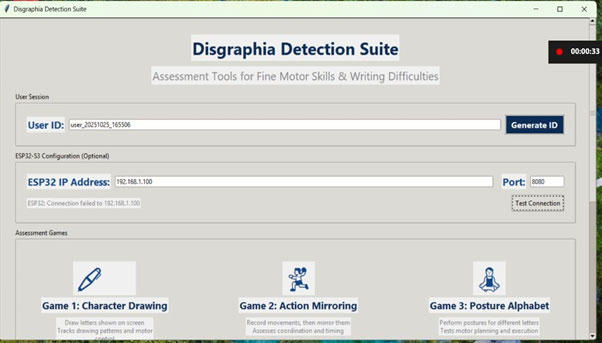
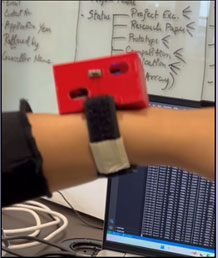
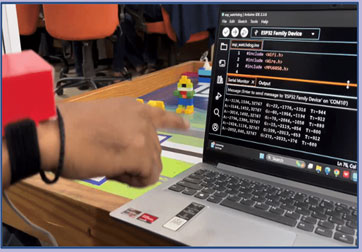
DysCover addresses this by using sensor-integrated behavioural analytics and machine learning for early detection. It includes three games that test letter tracing (motor precision), pattern repetition (temporal coordination), and reaction-based posture control (visuomotor coupling). Participants wear an IMU wristband with a vision module to record motion parameters like jerk magnitude, tremor frequency, grip stability, and trajectory deviation. These features are analyzed through a Random Forest-assisted CNN-LSTM model, integrating spatial and temporal cues to classify dysgraphic movements with 92% accuracy.
Bycombining biomechanical sensing and visual analytics, the system establishes a quantitative behavioural biomarker framework enabling objective, early Dysgraphia screening and timely neuropsychological intervention